
I’ve written about crypto theft enough times to develop a kind of professional numbness to the dollar figures.
This story broke through that numbness anyway, not because of the amount stolen, but because of how avoidable every single piece of it turns out to be once you actually look at the details. Three separate crypto theft vectors surfaced within days of each other this week, and they all point to the same uncomfortable truth: the platforms people trust most, Apple’s App Store, Google Play, and Google Search itself, are still the weakest link in crypto security, not the blockchain.
The Lawsuit That Exposes A Decade-Old Blind Spot
Three plaintiffs filed suit against Apple in California on July 24, alleging a fake app impersonating Sparrow Wallet convinced them to hand over seed phrases that were then used to drain roughly $1.8 million in Bitcoin, according to a post on X. James Ramirez, Christopher Ellis, and Jalen Delgado lost approximately $875,000, $840,000, and $120,000 respectively between May and August of 2025.
I think the most damning detail in this entire case is one that should have made the fake app impossible to approve in the first place: Sparrow Wallet is only available on Windows, macOS, and Linux, and its real developer has never released an iOS version. Any Sparrow app on the App Store is fake by construction, full stop, and yet the complaint alleges Apple didn’t just approve it, it placed the fake app into its own curated cryptocurrency collections, effectively vouching for it. Making this worse, Sparrow’s real developer Craig Raw had already flagged an identical impersonator in prior years, and rather than acting decisively on his warning, Apple’s response reportedly included flagging his own developer account. Apple told reporters it acted quickly to remove the impersonating apps and terminated the developer accounts behind them, though the lawsuit alleges other fake Sparrow apps have remained live even after being reported. This isn’t the first time this exact failure mode has cost users dearly either. A previous Ledger Live impersonator on the App Store drained $9.5 million from victims earlier this year, meaning this is now a documented, repeating pattern rather than an isolated slip.
SparkKitty Turns Your Camera Roll Into A Crime Scene
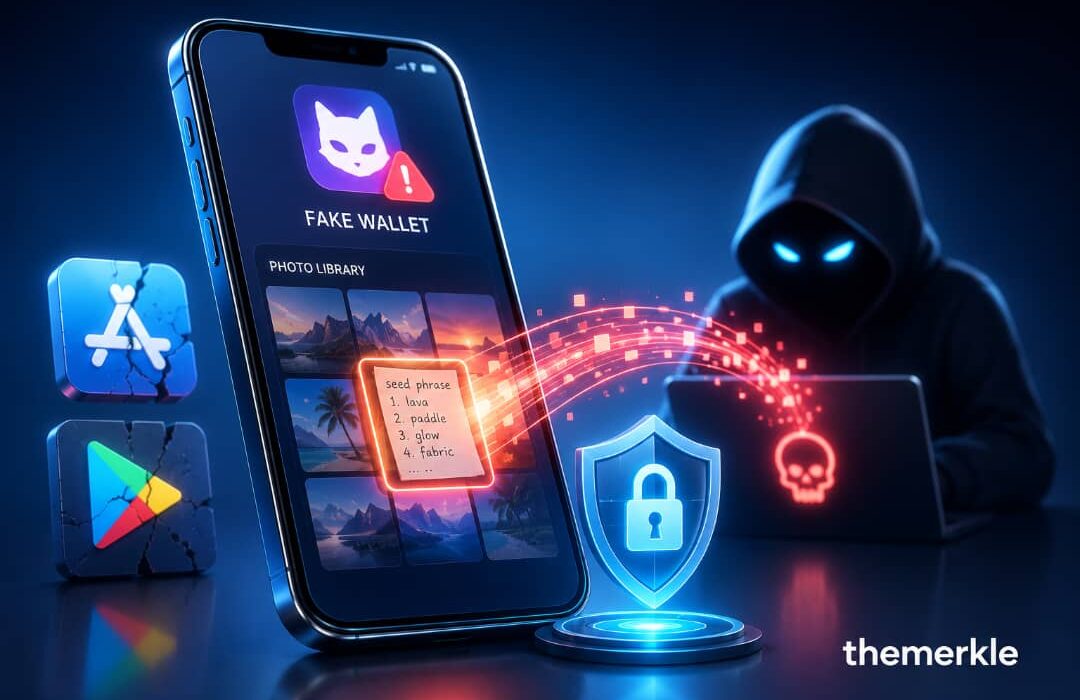
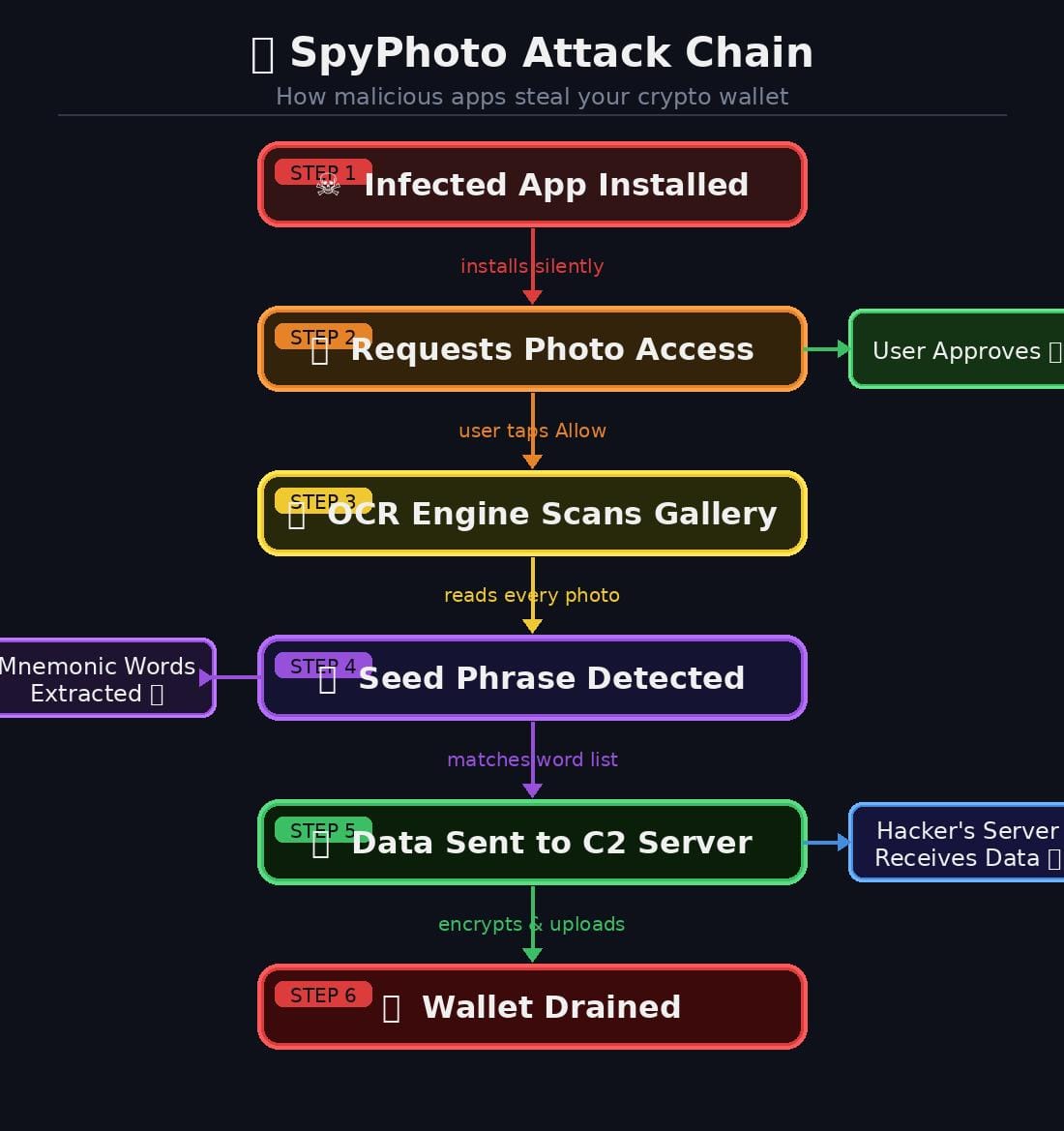
While that lawsuit was unfolding, Check Point published a separate report on a malware family called SparkKitty that I think deserves just as much attention. SparkKitty is a cross-platform malware that scans photos on infected Android and iOS devices using optical character recognition to hunt for cryptocurrency wallet seed phrases, allowing attackers to extract credentials without keystroke logging or clipboard monitoring.
Check Point describes it as an evolved version of SparkCat, an OCR-based stealer Kaspersky documented in 2025 that also pulled data from screenshots. On iOS, the malware hid inside a crypto app called “币coin,” concealing its malicious code well enough to pass Apple’s review process before requesting photo library access. On Android, it appeared inside SOEX, an app marketed as a messaging and crypto exchange platform that surpassed 10,000 downloads on Google Play before removal. The malware also spread through pirated APKs outside official stores, modified TikTok apps, and online betting apps.
I think the mechanism here is almost insultingly simple once you understand it, and that’s exactly what makes it so effective. You grant photo access, thinking it’s for uploading a profile picture or scanning a document, and the app quietly uploads your entire gallery, then scans it for anything resembling a 12 or 24-word phrase. Find a match, and the wallet tied to it is gone within minutes, with no bank, no chargeback, and no reversal process to fall back on.
The 26 Fake Wallets Hiding In Plain Sight
Beyond SparkKitty specifically, researchers separately identified 26 fake wallet apps on the App Store copying MetaMask, Trust Wallet, and Coinbase, using near-identical logos and branding with only tiny spelling variations to slip past casual scrutiny. I think this is the detail that should worry people most, because unlike SparkKitty’s silent gallery scan, these apps don’t need any clever exploit at all. You type your seed phrase directly into what looks like a legitimate wallet interface, and you’ve handed your funds over yourself, no malware trickery required beyond convincing branding.
Windows Users Aren’t Safe Either
If you’re reading this thinking desktop crypto management is safer, the picture there isn’t much better. More than 70 fake websites are currently impersonating popular Windows applications, including tools like PowerToys, CrystalDiskMark, EasyBCD, Lively Wallpaper, Wintoys, SignalRGB, and MKVToolNix, according to a report on X. Many of these lookalike domains rank above the real project pages in Google search results.
The playbook Check Point documented is patient and deliberately deceptive: the sites first build search rankings for a popular app’s name, appear harmless by linking to the genuine download source early on, and only later swap that legitimate link for a malicious installer once the site has accumulated enough traffic and trust. Check Point has already traced malware families like RemusStealer to these campaigns, and developers behind Lively Wallpaper and SignalRGB have separately confirmed active impersonation attempts targeting their own projects. I think the most unsettling part of this campaign is that it’s not crypto-specific at all. It’s infrastructure built to compromise anyone downloading common software, and crypto wallets or exchange credentials stored on an infected machine are simply the most valuable payoff once the trojanized installer runs.
Why This Keeps Happening Across Every Platform
I don’t think these three stories are actually separate incidents. I think they’re the same underlying failure showing up on three different platforms. App stores and search engines built their entire reputation on curation and trust, and attackers have figured out that impersonating a trusted brand is far easier than breaking any actual cryptography. Apple’s review process missed an app with no legitimate reason to even exist on iOS. Google Play hosted an app that uploaded users’ entire photo libraries without triggering enough scrutiny to get pulled quickly. And Google Search itself, the tool billions of people default to for “just find the download,” is now actively surfacing malicious sites above the real ones.
I think the phrase “just Google the app name and download it” needs to be retired entirely. It was reasonable advice for years. It genuinely isn’t anymore.
How To Prevent Yourself From Becoming A Victim, 3 Practical Steps
Understanding how these attacks work is only useful if it changes your habits. Here is the breakdown of these emerging attack vectors, alongside an immediate action plan to completely neutralize them.
1. Neutralizing SparkKitty: How to Protect Your Photos
SparkKitty is a cross-platform stealer that uses Optical Character Recognition (OCR) to scan images stored on Android and iOS devices. Disguised as messaging tools, gambling apps, or crypto utilities, it bypasses standard review processes, gains photo library access, and silently searches your camera roll for 12- or 24-word seed phrases.
The Prevention Checklist
- Execute a “Camera Roll Purge”: Never save screenshots, photos, or digital notes of your seed phrase. If one currently exists on your phone or in cloud storage (iCloud/Google Photos), treat it as compromised:
-
- Transfer funds to a newly created wallet immediately.
- Write down the new seed phrase on physical paper or steel only.
- Delete the original screenshot from your phone and clear it from your “Recently Deleted” folder and cloud backups.
- Audit App Permissions: Go to your device settings right now:
-
- iOS: Settings > Privacy & Security > Photos.
- Android: Settings > Apps > Permission Manager > Photos and videos.
- Action: Revoke gallery access from every app that does not strictly require it to function. For apps that do need image capabilities, set permission to “Selected Photos Only” rather than full library access.
- Avoid Sideloading and Modified Apps: SparkKitty frequently spreads through pirated APKs, modded social media clients (like modified TikTok apps), and third-party app stores. Stick to minimal, official software installations on any device used to manage financial assets.
2. Bypassing Fake Wallets and Search Engine Poisoning
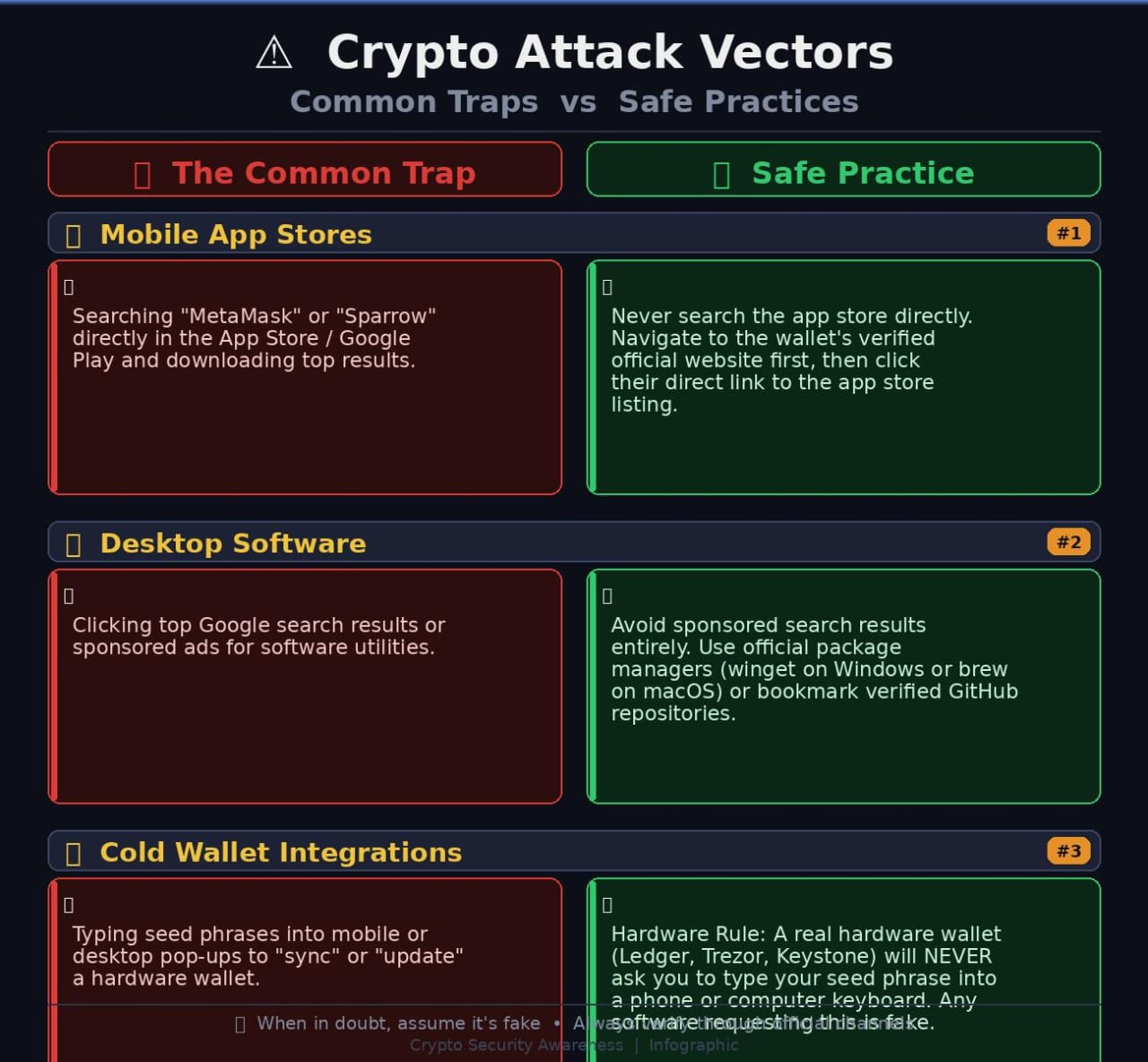
The recent lawsuit against Apple involving a non-existent iOS version of Sparrow Wallet, alongside 26 fake apps mimicking MetaMask, Trust Wallet, and Coinbase, highlights a dangerous trend: impersonation.
Simultaneously, malvertising campaigns on desktop search engines are placing lookalike sites above genuine open-source tools like PowerToys, SignalRGB, and system utility sites to deliver trojanized software.
When an app or download link looks convincing, standard visual checks fail. You need a strict verification protocol before entering credentials or downloading software.
3. The Modern Crypto Hygiene Playbook
App stores and search engines built their reputation on curation and trust, but attackers have learned that impersonating a trusted brand is far easier than cracking cryptography. “Just Google it” or “Search the App Store” are no longer safe instructions for crypto software.
Key Rules for Daily Protection
- Air-Gap Your Recovery Data: Keep seed phrases completely offline. Use stainless steel backup plates or paper stored in a fireproof safe. If bytes can touch it, malware can scan it.
- Isolate Your Devices: If possible, keep your primary crypto operations (hot wallets, trading) on a dedicated device that isn’t used for general web browsing, downloading random files, or testing new mobile apps.
- Verify App Availability: Before downloading any tool, check the developer’s official site to confirm a version even exists for your operating system. If a project explicitly states they don’t have an iOS or Android app, any store listing bearing their name is fraudulent.
- Report Suspicious Listings: When you spot a fake app or deceptive search ad, take thirty seconds to report it to the platform. Collective reporting forces platforms to remove malicious infrastructure before it impacts other users.
The underlying technology securing public blockchains remains remarkably robust. By shifting your trust away from third-party app store curation and implementing strict verification habits, you ensure the platforms surrounding your crypto don’t become your single point of failure.
Some visuals in this article are AI-generated illustrations created to demonstrate an information.
Disclosure: This is not trading or investment advice. Always do your research before buying any cryptocurrency or investing in any services.
Follow us on Twitter @themerklehash to stay updated with the latest Crypto, NFT, AI, Cybersecurity, and Metaverse news!